OIC · FOSPAH
Sub-Committee on Women's Rights
OICOA
Strengthening institutional frameworks for women's protection, justice, and empowerment across OIC member states.
11
Members
57
OIC States
2026
Active
Latest News
Updates from the Sub-Committee
Second Meeting
Second OICOA Sub-Committee Meeting Reviews Landmark Compendium, Welcomes Tanzania and Rwanda
JUN
2026 · Second Meeting
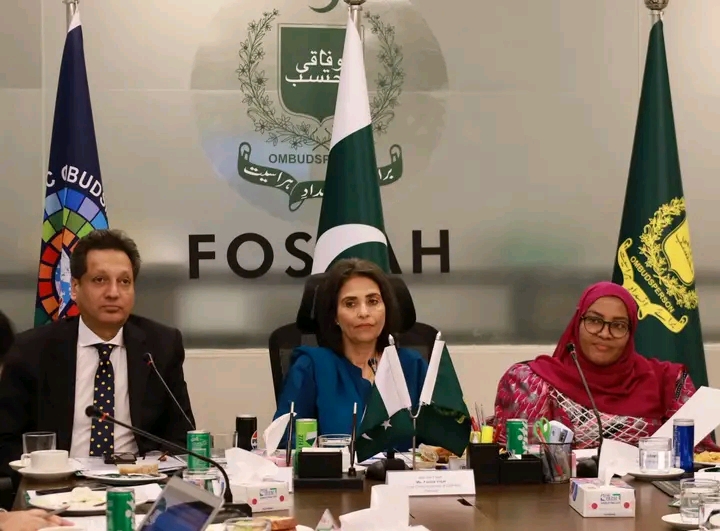
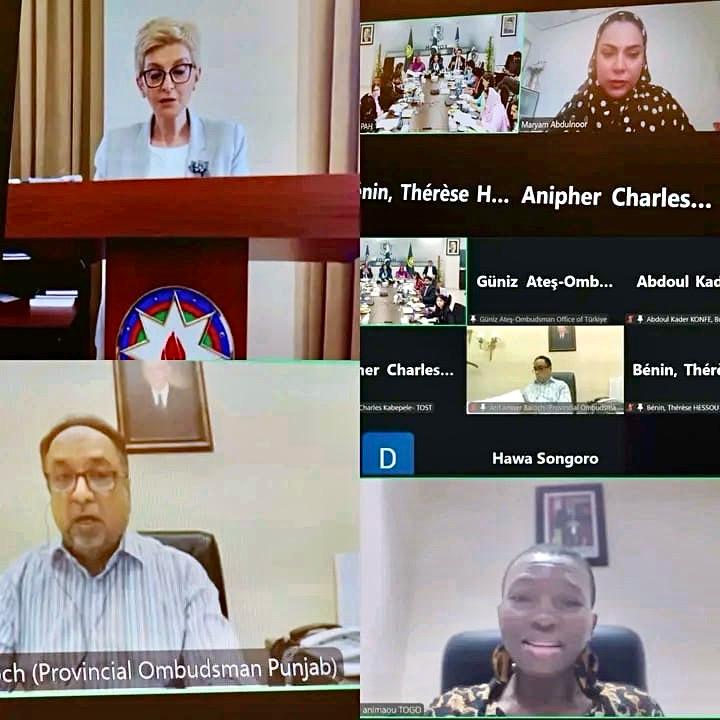
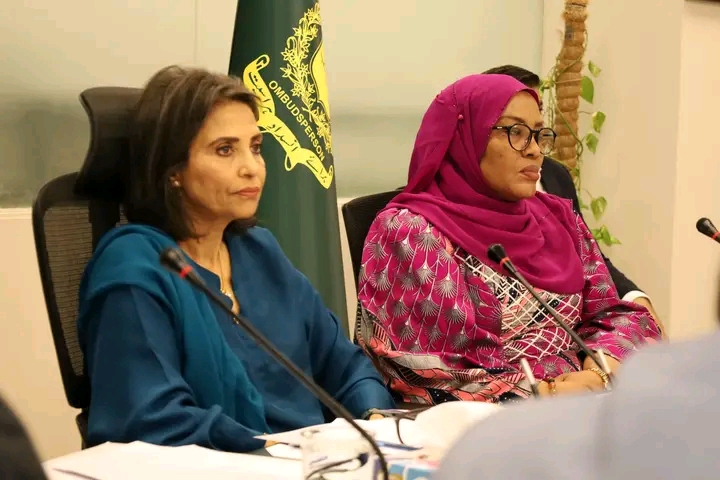
The Second Meeting of the OICOA Sub-Committee on Women's Rights was held on Thursday 18 June 2026 in Islamabad, Pakistan, chaired by Federal Ombudsperson Ms. Fauzia Viqar and attended by delegations from Türkiye, Azerbaijan, Bahrain, Benin, Burkina Faso, Pakistan, Senegal and Togo, alongside the OICOA Secretariat and Provincial Ombudsman offices from Khyber Pakhtunkhwa and Punjab.
"The true value of this Sub-Committee lies in our ability to share solutions, strengthen institutional cooperation, and advance women's rights across OIC Member States." — Federal Ombudsperson Ms. Fauzia Viqar
The Sub-Committee formally welcomed two new observers — Tanzania and the Mission of Rwanda, represented by Her Excellency Fatou Harerimana — broadening the forum's collective mandate. The centrepiece of the meeting was the formal review of the Comparative Compendium of Women-Friendly Laws, Policies and Redress Mechanisms, compiled by the Secretariat as a baseline reference across participating member states.
Member States presented updates on legislative and institutional progress since the inaugural meeting, including constitutional and electoral reforms in Benin, equal-pay labour law amendments in Azerbaijan, Bahrain's 2025–2026 National Plan for the Advancement of Women, and Togo's continued gains under the World Bank's Women, Business and the Law report. The session closed with remarks from the OICOA Executive Secretary General on the path toward the Sub-Committee's Plan of Action.
New Observers Welcomed
Tanzania and Rwanda join the Sub-Committee, widening regional representation.
Compendium Reviewed
Formal review of the Comparative Compendium of Women-Friendly Laws & Institutions.
Country Progress Updates
Legislative and institutional advances reported by Benin, Azerbaijan, Bahrain and Togo.
Institutional Cooperation
Discussion on cross-border referral mechanisms and access-to-justice gaps.
First Meeting
FOSPAH Hosts First OICOA Sub-Committee Meeting to Strengthen Women's Rights in the OIC
DEC
2025 · First Meeting
The First Meeting of the Sub-Committee of the Organization of Islamic Cooperation Ombudsman Association (OICOA) was held on Monday 22 December 2025, attended by members Pakistan, Azerbaijan, Bahrain, Benin, Burkina Faso, Senegal, Togo and Türkiye, along with representatives from the Women Development Organization (WDO), Provincial Ombudsman offices from Khyber Pakhtunkhwa and Punjab, and the OICOA Secretariat.
"Collective wisdom lays the foundation for a shared journey towards strengthening women's rights across OIC member states." — Federal Ombudsperson Ms. Fauzia Viqar
Country presentations highlighted constitutional guarantees, legislative and policy frameworks and implementation mechanisms — including repealing restrictions on women's employment across 674 occupations in Azerbaijan, positive discrimination and reserved parliamentary seats in Benin and Pakistan, reduced election fees for women in Togo, and advocacy on reproductive health, child marriages, alimony and economic opportunities.
Members highlighted ongoing challenges including socio-cultural barriers, weak culture of reporting, and low representation of women in decision-making. The meeting concluded with discussion on the Plan of Action and alignment with the OIC's Plan of Action for advancement of women.
Legislative Reforms
Repealing restrictions on women's employment across sectors in Azerbaijan and beyond.
Political Participation
Reserved parliamentary seats and reduced election fees boosting women's representation.
Capacity Building
Sessions planned for sub-committee members and general OICOA membership.
OIC Alignment
Plans aligned with the OIC's broader Plan of Action for advancement of women.
Photo Gallery
Select a meeting to view photos
Latest
6 Photos
Second Meeting
18 June 2026 · Islamabad, Pakistan
.jpg)
Inaugural
4 Photos
First Meeting
22 December 2025 · Islamabad, Pakistan
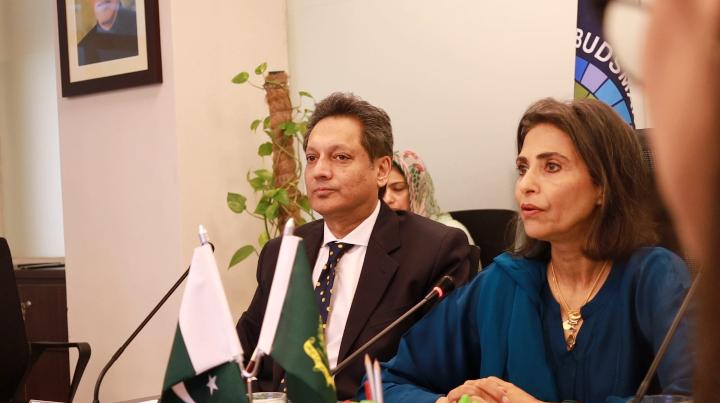
18 June 2026 · Islamabad, Pakistan
Second OICOA Sub-Committee Meeting
Country statements, the new Compendium review, and welcome of new observers Tanzania and Rwanda.
.jpeg)
.jpeg)
22 December 2025 · Islamabad, Pakistan
First OICOA Sub-Committee Meeting
The inaugural meeting that established the Sub-Committee's framework and adopted its Plan of Action.
.jpg)
.jpg)
.jpg)
Meeting Minutes
Official records of all sub-committee meetings
OICOA Sub-Committee — Second Meeting
18 Jun 2026
Minutes of the second meeting held in Islamabad, Pakistan. Covers the Compendium review, country statements, welcome of new observers Tanzania and Rwanda, and the remarks of the OICOA Executive Secretary General.
View PDFOICOA Sub-Committee — First Meeting
22 Dec 2025
Minutes of the inaugural meeting held in Islamabad, Pakistan. Covers country presentations, key outcomes, challenges discussed, and the adopted Plan of Action for advancing women's rights across OIC member states.
View PDFStatements
Official statements from sub-committee members and leadership
WELCOME REMARKS BY THE CHAIR(ENGLISH)
Excellencies, Representatives of Member States, Distinguished Observers, Representatives of Missions, Ladies and Gentlemen, Assalamualaikum and Good Afternoon. It is my privilege to welcome you to the Second Meeting of the OICOA Sub-Committee on Women's Rights.
"The true value of this Sub-Committee lies in our ability to share solutions, strengthen institutional cooperation, and advance women's rights across OIC Member States."
Excellencies, Representatives of Member States, Distinguished Observers, Representatives of Missions, Ladies and Gentlemen, Assalamualaikum and Good Afternoon.
It is my privilege to welcome you to the Second Meeting of the OICOA Sub-Committee on Women's Rights.
I would like to extend a special welcome to our new observers joining today's dialogue: Tanzania and the Mission of Rwanda represented by Her Excellency Fatou Harerimana. Your presence broadens our collective mandate and enriches the diversity of experiences around this table.
Since our inaugural meeting, we have moved from establishing our institutional foundations to producing concrete guidance. I am pleased to note that the Secretariat has successfully compiled a comprehensive compendium of women-friendly laws, policies and redress mechanisms across participating countries.
This compendium, which we will formally review today, is not merely a reference document. It provides an essential baseline for measuring our collective progress and understanding where we stand across the OIC region.
While our national legal frameworks may differ, the complaints women bring before our institutions are remarkably similar. This is why I hope today's discussions will be highly operational and focused on practical mechanisms for improving access to justice.
Today's agenda focuses on three priority areas:
1. Analysing complaint trends and emerging challenges.
2. Evaluating institutional redress mechanisms.
3. Identifying legal and policy gaps requiring reform.
1. Analysing complaint trends and emerging challenges.
2. Evaluating institutional redress mechanisms.
3. Identifying legal and policy gaps requiring reform.
The true value of this Sub-Committee lies in our ability to share solutions. I encourage all participants to speak openly not only about successes but also about the systemic challenges faced by your institutions.
By identifying common gaps, we can create targeted opportunities for cross-border collaboration, knowledge sharing and capacity building.
Following our principal agenda items, we will also have the privilege of hearing from the Executive Secretary General of OICOA.
Let today's session be direct, constructive and impactful for the millions of women who rely upon our institutions for justice.
Thank you. I look forward to productive discussions and meaningful outcomes from this meeting.
WELCOME REMARKS BY THE CHAIR(FRENCH)
Excellences, Représentants des États membres, Distingués observateurs, Représentants des missions, Mesdames et Messieurs, Assalamualaikum et bon après-midi.
« La véritable valeur de ce Sous-Comité réside dans notre capacité à partager des solutions et à renforcer la protection des droits des femmes dans l'ensemble de la région de l'OIC. »
Excellences, Représentants des États membres, Distingués observateurs, Représentants des missions, Mesdames et Messieurs, Assalamualaikum et bon après-midi.
C’est un privilège pour moi de vous accueillir à la deuxième réunion du Sous-Comité de l’OICOA sur les droits des femmes.
Je souhaite adresser un accueil tout particulier à nos nouveaux observateurs qui se joignent à notre dialogue aujourd’hui : la Tanzanie et la Mission du Rwanda, représentée par Son Excellence Fatou Harerimana.
Depuis notre réunion inaugurale, nous sommes passés de la mise en place de nos fondations institutionnelles à la production d’orientations concrètes.
J’ai le plaisir de souligner que le Secrétariat a compilé avec succès un compendium complet des lois, politiques et mécanismes de recours favorables aux femmes dans nos pays participants.
Ce compendium, que nous examinerons formellement aujourd’hui, n’est pas simplement un document de référence. Il constitue une base essentielle pour nos progrès collectifs.
Ordre du jour :
1. Analyser les tendances des plaintes.
2. Évaluer les mécanismes de recours.
3. Identifier les principales lacunes juridiques et politiques.
1. Analyser les tendances des plaintes.
2. Évaluer les mécanismes de recours.
3. Identifier les principales lacunes juridiques et politiques.
La véritable valeur de ce Sous-Comité réside dans notre capacité à partager des solutions.
Je vous encourage aujourd’hui à parler ouvertement non seulement des réussites de vos institutions, mais aussi des obstacles systémiques auxquels vous êtes confrontés.
En identifiant ces lacunes communes, nous pourrons créer des opportunités ciblées de collaboration transfrontalière et de renforcement des capacités.
Après les points principaux de notre ordre du jour, nous aurons également le privilège d’entendre le Secrétaire général exécutif de l’OICOA.
Faisons en sorte que la séance d’aujourd’hui soit directe, constructive et porteuse d’impact pour les millions de femmes qui comptent sur nos institutions pour obtenir justice.
Je vous remercie. Je me réjouis maintenant de discussions productives et de résultats significatifs issus de cette réunion.
Statement from Benin
Some Women-Friendly Laws, Mechanisms and Initiatives in the Republic of Benin. Distinguished Ombudsmen, Members of the OICOA Sub-Committee on Women's Rights, Honourable Guests, Ladies and Gentlemen, it is an honour for me to present, within the framework of the work of the Sub-Committee on Women's Rights, a number of laws, mechanisms and initiatives undertaken by the Republic of Benin with the aim of contributing to the achievement of gender equality and the empowerment of women and girls through poverty reduction, institutional strengthening and gender-responsive financing.
In this regard, I am pleased to highlight the appointment of a woman to the high-ranking State position of Vice President of the Republic, a position now enshrined in the Constitution of Benin; the revision of the Electoral Code to ensure improved representation of women in the national Parliament; and the strengthening of the mandate of the National Institute for Women to enable a more effective response to Gender-Based Violence, as well as the reinforcement of the legislative framework for combating Gender-Based Violence through the adoption of three specific laws.
Furthermore, in light of the provisions contained in international conventions including CEDAW, the Beijing Platform for Action, UN Security Council Resolution 1325, the Millennium Development Goals, the Solemn Declaration of African Heads of State on Gender Equality in Africa, the African Charter on Human and Peoples' Rights and its Protocol on the Rights of Women, the Government of Benin has undertaken commitments, adopted measures and implemented actions aimed at promoting gender equality.
Legislative Measures include: Law No. 2021-11 of 20 December 2021 on special measures for the repression of offences committed on the basis of a person's sex; Law No. 2021-12 of 20 December 2021 amending the law on sexual and reproductive health; Law No. 2003-03 prohibiting and punishing female genital mutilation; Law No. 2011-06 on the prevention and punishment of violence against women; and Law No. 2013-01 establishing the Land and State Property Code, which sets out rules governing women's land tenure rights.
Institutional Measures include: the establishment of a Ministry responsible for the promotion of women (1998); a Ministry of Microfinance dedicated to microcredit and entrepreneurship for youth and women (2006); the National Institute for the Promotion of Women to conduct studies on women's issues (2009); gender focal points within ministries and municipalities (2007); the National Council for the Promotion of Gender Equity and Equality (2014); girls' secondary schools across all departments; and support and listening services for victims of gender-based violence within 85 Social Promotion Centres (2010).
Strategic Measures include: adoption of the National Gender Promotion Policy and its Action Plan (2009); an Action Plan to Combat Gender-Based Violence (2010); integration of gender considerations into the State's General Budget Economic Orientation Framework (2013); and development of Standard Operating Procedures for the integrated care of victims of gender-based violence (2014).
Social and Economic Measures include: progressive introduction of free education and fee exemptions for girls in secondary education; government support for girls in technical education; free caesarean section services; a microcredit programme for the poorest, of which over 98 percent of beneficiaries are women; the Rural Agricultural Activities Support Fund; and a programme providing work equipment to women's groups involved in processing primary sector products, benefiting approximately 425 groups.
In conclusion, this list of initiatives aimed at promoting women's rights and gender equality is not exhaustive. Many other initiatives are being implemented by Civil Society Organizations and Technical and Financial Partners. Thank you for your attention.
Statement from Azerbaijan
Regarding updated information from Member States on women-friendly laws and mechanisms undertaken by Azerbaijan: The Law "On Amendments to the Labour Code of the Republic of Azerbaijan and the Law of the Republic of Azerbaijan 'On Guarantees of Gender (Men and Women) Equality'" was approved by the President of the Republic of Azerbaijan. It is aimed at ensuring more comprehensive gender equality in the field of wages in the country. Under the new Law, amendments were made to Articles 12 and 154 of the Labour Code.
These amendments stipulate: • that employers are obliged to pay equal wages to employees performing the same or different work of equal value regardless of gender, • that the equal value of work is determined by the employer, taking into account working conditions, the nature of labour functions, and tariff-qualification characteristics envisaged in the Unified Tariff-Qualification Reference Books currently in force.
Statement from KPK Ombudsman
Among the Khyber Pakhtunkhwa-specific women-related laws, the principal statutes are: The Khyber Pakhtunkhwa Enforcement of Women's Property Rights Act, 2020, which protects and secures women's ownership and inheritance rights in property; The Khyber Pakhtunkhwa Commission on the Status of Women Act, 2016, which establishes the KP Commission on the Status of Women; and The Khyber Pakhtunkhwa Protection against Harassment of Women at the Workplace (Amendment) Act, 2010.
STATEMENT FROM Bahrain
Women's Rights: Laws, Mechanisms & Initiatives 2025 – 2026 OICOA Sub-Committee on Women's Rights (the second meeting 18th June 2026) Overview Bahrain's commitment to gender equality is embedded across legislation, national planning, and institutional reform. Since 2025, the Kingdom has advanced this agenda through five interconnected areas: 1. National Plan 2025–26 2. Legislative Reforms 3. Economic Empowerment 4. Institutional Mechanisms 5. International Recognition
Each pillar reflects Bahrain's National Action Plan, CEDAW commitments, and Vision 2030 goals for inclusive development. National Plan for the Advancement of Bahraini Women (2025–2026) Theme: "Bahraini Women: Empowerment, Progress, and Leadership" Approved by the Supreme Council for Women (SCW), chaired by HRH Princess Sabeeka bint Ibrahim Al Khalifa. Family Stability: Preserving family values; supporting women in balancing family and societal roles. Decision-Making: Enhancing women's participation in legislative, executive, and leadership roles. Economic Participation: Equal opportunities, female entrepreneurship, and workforce integration. Quality of Life: Health, sports, environment, housing, and social services tailored to women.
STATEMENT FROM TOGO
MECHANISMS AND INITIATIVES FAVORABLE TO WOMEN UNDERTAKEN BY TOGO SINCE THE FIRST MEETING OF THE OICWA SUB-COMMITTEE ON WOMEN'S RIGHTS. Togo ranks 2nd in Africa according to the Women, Business and the Law 2026 report by the World Bank. Togo's commitment to women's rights and gender equality has been recognized by the World Bank Group through its Women, Business and the Law 2026 report, published on February 24, 2026. With an overall score of 79.33 out of 100, the country ranks second in Africa.
Definitive adoption of the law authorizing the ratification of the African Protocol on the Rights of Persons with Disabilities. On Friday, May 15, 2026, the deputies unanimously adopted the bill authorizing the ratification of the protocol to the African Charter on Human and Peoples' Rights relating to the rights of persons with disabilities in Africa. The African protocol enshrines fundamental principles such as non-discrimination and equality before the law, accessibility and full inclusion of persons with disabilities, and participation in political, social, cultural, and sports life.
Adoption of the legal framework for gender-sensitive budgeting. Togo has taken significant steps to integrate the gender dimension into its budget management. This approach was formalized by inter-ministerial order N°007/2026/MBF/MSGFPE on May 11, 2026, which establishes the necessary foundations for a budget that takes into account the specific needs of women and men.
STATEMENT BY EXECUTIVE SECRETARY OICOA FOR THE 2ND MEETING OF THE OICOA SUB-COMMITTEE ON WOMEN RIGHTS
Hon'ble Federal Ombudsperson, H.E. Ms. Fauzia Viqar and Distinguished Members of the OICOA Sub-Committee on Women Rights. I welcome you all to the second meeting of this Sub-Committee. When we concluded our inaugural session of OICOA Sub-Committee on Women Rights in December 2025, we did so with a specific, ambitious mandate: to move beyond abstract discussions of gender equity and systematically map the legal and institutional realities across our member states.
I offer my sincere gratitude to Ms. Fauzia Viqar for steering this immense analytical undertaking, and to the specialized team at the Federal Ombudsperson Secretariat for Protection Against Harassment whose meticulous efforts made this compendium a reality. Equally, we owe a profound debt of gratitude to the participating Member States of the OICOA Sub-Committee on Women's Rights: Türkiye, Azerbaijan, Bahrain, Benin, Burkina Faso, Pakistan, Senegal, and Togo for so generously offering the legal architectures of their respective states for international peer review.
Looking ahead, the OICOA Secretariat remains deeply invested in the forthcoming convenings of this Sub-Committee. We eagerly anticipate the progress towards this Sub-Committee's Plan of Action, as it is not just a mere administrative milestone, but is brimming with the potential to serve as a rigorous operational blueprint designed to drive systemic, cross-border impact for the advancement and protection of women's rights across the OIC region.
Announcements
Upcoming events and official notices
Upcoming Event
Second OICOA Sub-Committee Meeting on Women's Rights
FOSPAH will host the second meeting bringing together OICOA Secretariat, sub-committee members, regional representatives, observer participants and diplomatic missions.
Days remaining
2
Until meeting
Meeting Agenda Highlights
Key Developments
Review of progress since the inaugural meeting and legislative updates from member states.
Emerging Challenges
Identifying existing gaps and systemic barriers in the protection of women's rights.
Referral Mechanisms
Establishing effective cross-border referral systems for women seeking justice.
Institutional Cooperation
Fostering exchange of expertise among Ombudsman institutions across the OIC.
Previous Meeting: First Meeting — 22 December 2025
The inaugural meeting established the Sub-Committee's framework, adopted the Plan of Action, and opened participation to the general OICOA membership.
Documents
Official reference materials and reports
PDF
Agenda of Second meeting
Sub-Committee of OICOA on Women Rights Second Meeting
PDF
Comparative Compendium of Women-Friendly Laws & Institutions — EN
OIC Ombudsman Association – Sub Committee on Women's Rights.
PDF
Comparative Compendium of Women-Friendly Laws & Institutions — FR
OIC Ombudsman Association – Sub Committee on Women's Rights.
PDF
OICOA Terms of Reference
Advancing women's rights, empowerment, and gender justice across OIC Member States through policy harmonization, institutional cooperation, and effective redress mechanisms.
PDF
List of members (Notification)
List of members and the foundational mandate governing the sub-committee's work.
PDF
First Meeting Minutes
Official minutes of the inaugural Sub-Committee meeting held on 22 December 2025, including the adopted Plan of Action.